


Blueprint
Society
We鈥檙e imagining two friends looking out over the location towards the city.

Looking for work?

Ufuna umsebenzi? 路 O batla mosebetsi? 路 Soek jy werk? 路 Unatafuta kazi?

Sign up

Free. No CV needed. We’ll reach you on WhatsApp.

Context

Africa doesn’t have a talent problem.
It has an access problem.

Africa will add hundreds of millions of people to its working-age population over the coming decades. It is one of the continent’s greatest advantages — a young population capable of building companies, operating industries and creating the next generation of African economic growth.

But having people and making productive use of their ability are two very different things.

Across the continent, millions of capable people remain unemployed or underemployed, while employers continue searching for people they can trust to do the work. Somewhere between those two groups, enormous amounts of human potential are being lost.

The problem

Talent is difficult to see.

The traditional employment system is good at evaluating what can easily be put on paper: qualifications, previous jobs, references and experience.

It is less effective at identifying the person who has never had the opportunity to build those things in the first place.

Someone can be intelligent, reliable, technically capable and extraordinarily driven — and still remain almost invisible to an employer because they do not have the conventional signals required to get through the door.

People looking for work and companies looking for skilled people — at the same time.

The bottom line

A degree isn’t the same thing as ability.

Just because someone couldn’t afford to go to university doesn’t mean they are less capable than the person who could. In many cases, they may be every bit as skilled — or more skilled — but without the qualification, network or experience that gives an employer a reason to notice them.

A degree has become one of the easiest ways to communicate ability. It gives employers something recognisable to trust. But it is also expensive, takes years to obtain and remains inaccessible to millions of talented people.

We think there should be another way.

Our job is to build an alternative — and ultimately stronger — version of an expensive CV. Something based on what a person can actually do rather than what they could afford to put on paper. Something that gives employers real evidence of ability, while giving talented people a credible way to prove themselves.

Opportunity should follow ability, not affordability.

The opportunity

A stronger workforce for Africa.

We believe a significant amount of Africa’s workforce already exists. It simply needs a better way to be discovered.

If ability can be identified and proven before traditional credentials become the deciding factor, the pool of people available to employers becomes significantly larger.

That matters for individuals. But at scale, it also matters for companies, communities and economies.

A person entering meaningful employment earns an income, develops skills, builds experience and becomes considerably easier to employ again. Do that repeatedly, across enough people, and employment becomes more than an individual outcome.

It becomes infrastructure.

Early progress

Reached through WhatsApp communities
2.6M+
Reached through WhatsApp communities
Students in our school community
20,000+
Students in our school community

The 2.6 million isn’t a list of job seekers. It’s the reach we built to listen: votes and short polls that told us which African problem to solve first. The answer was work.

An evening in the location, with the city rising on the horizon.
Talent lives on every street. Opportunity should too.

Where it started

We learnt how to reach people before we knew what we were building.

It started with a school club.

We built a community that connected regular students with extraordinary business leaders nationally — giving young people access to conversations, people and perspectives they ordinarily wouldn’t have had.

Founders, executives and other accomplished people would speak to students, share what they had learnt and answer questions directly. What started small eventually grew into a community of more than 20,000 high-school students across South Africa.

But somewhere along the way, we realised we were learning something ourselves.

We were learning how to find people, bring them into a community and keep thousands engaged — largely through WhatsApp. It became our first real lesson in what distribution could look like when you met people on platforms they already used every day.

Eventually, we decided to take what we had learnt and apply it to something we cared about considerably more: Africa.

Into the communities

So we left the car keys at home.

We knew we wanted to understand township communities better. We also knew we weren’t going to do that properly from behind a laptop.

At the time, we believed Uber was our strongest way in. So we started leaving the car keys behind and ordering Ubers instead.

And whenever we could, we sat in the front.

We explained that we were trying to build something that could improve opportunity across Africa, spoke about what we were learning and asked the driver whether they knew anyone with the skills we needed — initially, people who could code and help us build the WhatsApp side of what we were testing.

One conversation led to another. Introductions became communities, and the lessons from the school club gave us a way to distribute through a platform people were already comfortable using.

Through WhatsApp, those communities have now reached more than 2.6 million people. They were never a list of job seekers. We used them to listen: through votes and short polls, we asked people which problems mattered most and which solution Africa needed first. The answer kept coming back to work.

The number matters, but what it taught us matters more. We started developing a much closer understanding of the communities Blueprint Society would eventually be built to serve — who people are, what they are looking for, where ability exists and what can prevent that ability from ever being seen.

Blueprint Society is what we decided to build with that understanding.
The taxi rank at sunrise, with the city on the horizon.

There’s beauty in the taxis that carry our workforce.

The taxi rank at sunrise, with the city on the horizon.

How it works

A stronger alternative to an expensive CV.

  1. 01 Find

    Reach overlooked people

    Potential should not depend on who already has access.

  2. 02 Test

    Short interviews and real tasks

    Ability, reliability, learning and execution become visible.

  3. 03 Prove

    Build a record of performance

    Employers get evidence instead of another unknown CV.

  4. 04 Place

    Connect people to real opportunities

    Strong performers get a credible route into employment.

Our approach

Prove what people can do.

Blueprint Society is being built around a simple idea: give people the opportunity to demonstrate their ability before asking an employer to believe in it.

We identify overlooked talent and put people through practical work designed to show how they actually perform — how they think, communicate, learn, execute and respond when given responsibility.

That creates evidence.

Instead of presenting an employer with another unknown candidate, Blueprint can increasingly present someone with a demonstrated record of what they can actually do.

Real-world trials

The work itself becomes the assessment.

Finding people is only the beginning. The harder question is figuring out who can actually perform when given real responsibility.

Blueprint uses operating companies as real working environments. Selected talent contributes to actual projects, works with real teams and is assessed over time — not through a made-up test, but through the work itself.

Go.Babble

Consumer growth, community distribution and brand-facing work.

Qylo

Education, product, technology and offline-first platform work.

Across both environments, we can see how someone communicates, learns, solves problems, works with others and executes when the outcome actually matters.

By the time we recommend someone, we want to be able to say:

‘We’ve worked with them. Here’s what they can do.’

What we do

From overlooked to employable.

Blueprint sits between people looking for an opportunity and organisations looking for capable people.

We source talent, vet ability, create opportunities for people to prove themselves and help move the strongest performers into meaningful employment.

Over time, the system should become better at understanding both sides: who is good at what, and where that ability is most valuable.

The objective isn’t to replace qualifications, universities or traditional recruitment. It is to create another route into the workforce for people those systems don’t see particularly well.

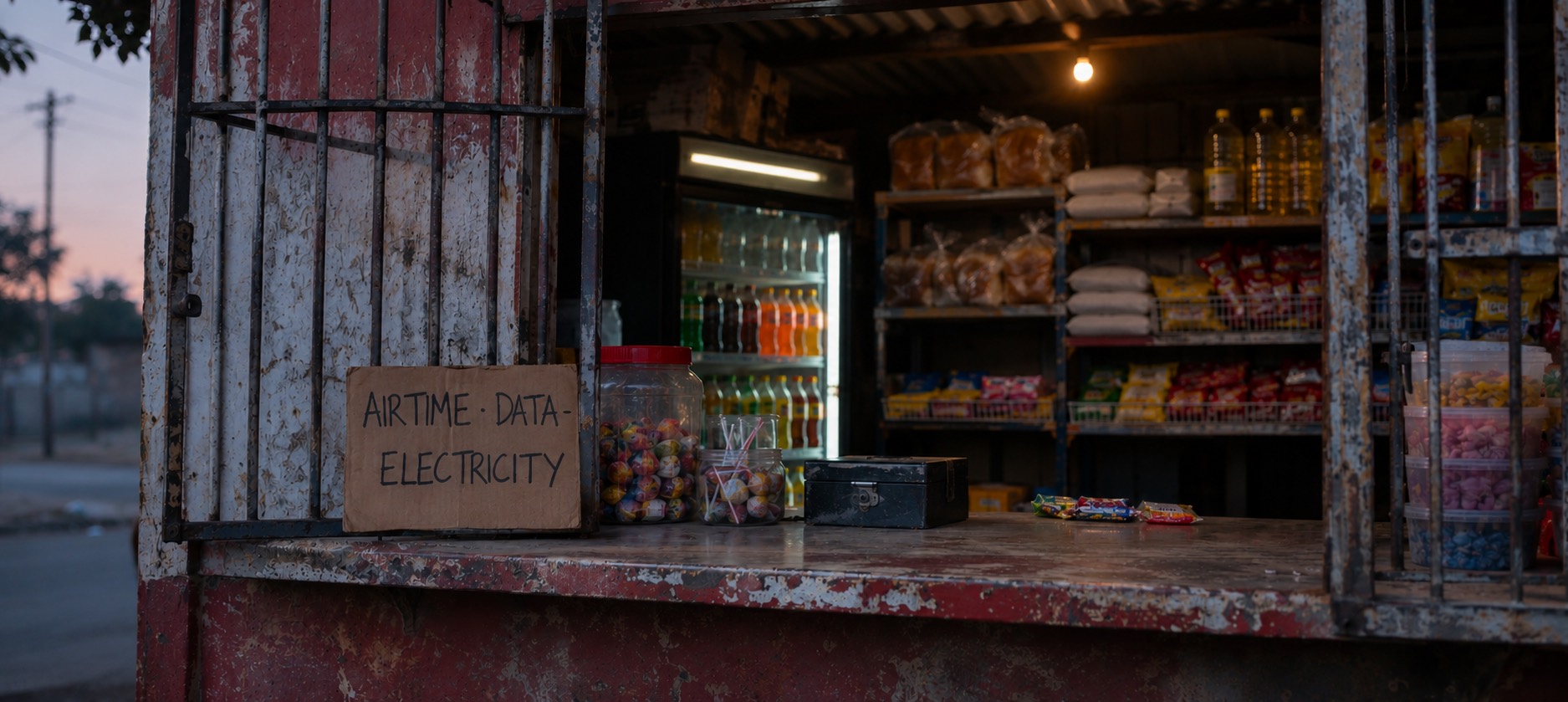
The spaza counter at dusk.

There’s a whole economy behind every spaza counter.

The spaza counter at dusk.

The model

Build the bridge.

Finding talent is only useful if there is somewhere for that talent to go.

That means Blueprint also works on the other side of the equation — with companies, government and other organisations capable of creating employment.

The goal is to make employing overlooked talent easier: identify the people, establish evidence around their ability, connect them with the right opportunity and continue learning from what happens once they enter the workforce.

Each successful placement gives the system more information about what good looks like.

The bigger picture

Human potential, better distributed.

Africa does not need every young person to follow the same route into employment.

It needs more routes.

Blueprint Society’s long-term ambition is to build infrastructure capable of identifying human potential wherever it exists and connecting that potential with productive work across the continent.

Because the real opportunity isn’t simply finding jobs for people.

It is making sure that where someone starts has less influence over where they can eventually go.

Looking for work?

Start with two minutes.

Tell us who you are and what work you want. No CV needed, and it’s free.

Ufuna umsebenzi? 路 O batla mosebetsi? 路 Soek jy werk? 路 Unatafuta kazi?

Sign up Hiring? Talk to us